
Cheap AI accounts for sale and pirated AI apps
Cheap "shared" premium AI accounts and free AI apps from ads can bring data thieves onto the shop computer. Buy and download only from the official source.
4 min readUpdated 7 November 2026
What happened
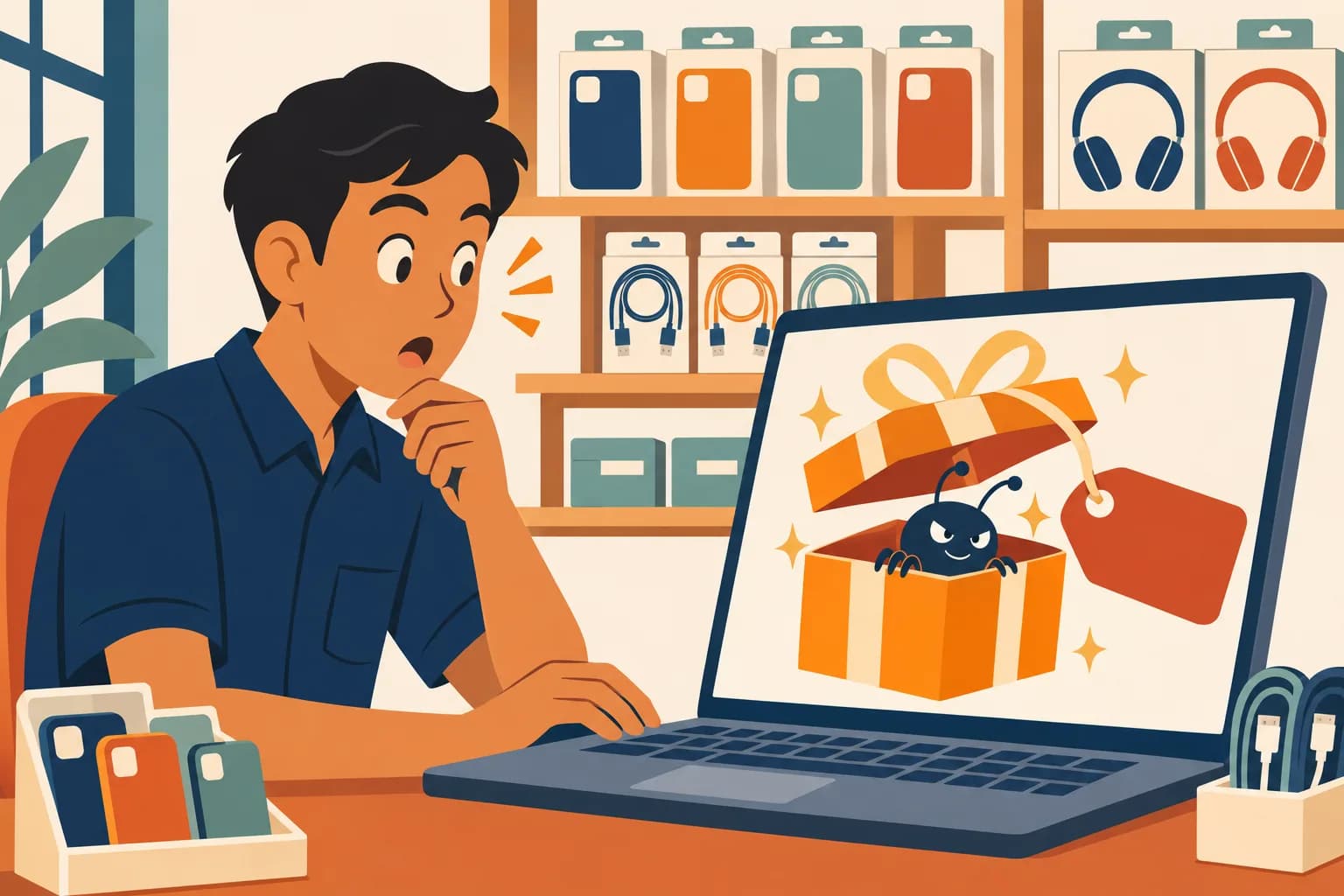
Mas Rizky runs a phone-accessories shop. He wanted to use AI to write product descriptions. In a buy-and-sell group someone offered a "shared premium AI account" far below the official price. Just transfer the money, and you get an email address and password.
The same day, a social media ad offered a "free desktop AI app". The download was a ZIP file with an installer. Mas Rizky hesitated and checked the AI service's official website. There was no desktop app like the one advertised. He closed the ad and bought a subscription directly from the official site.
What are the risks?
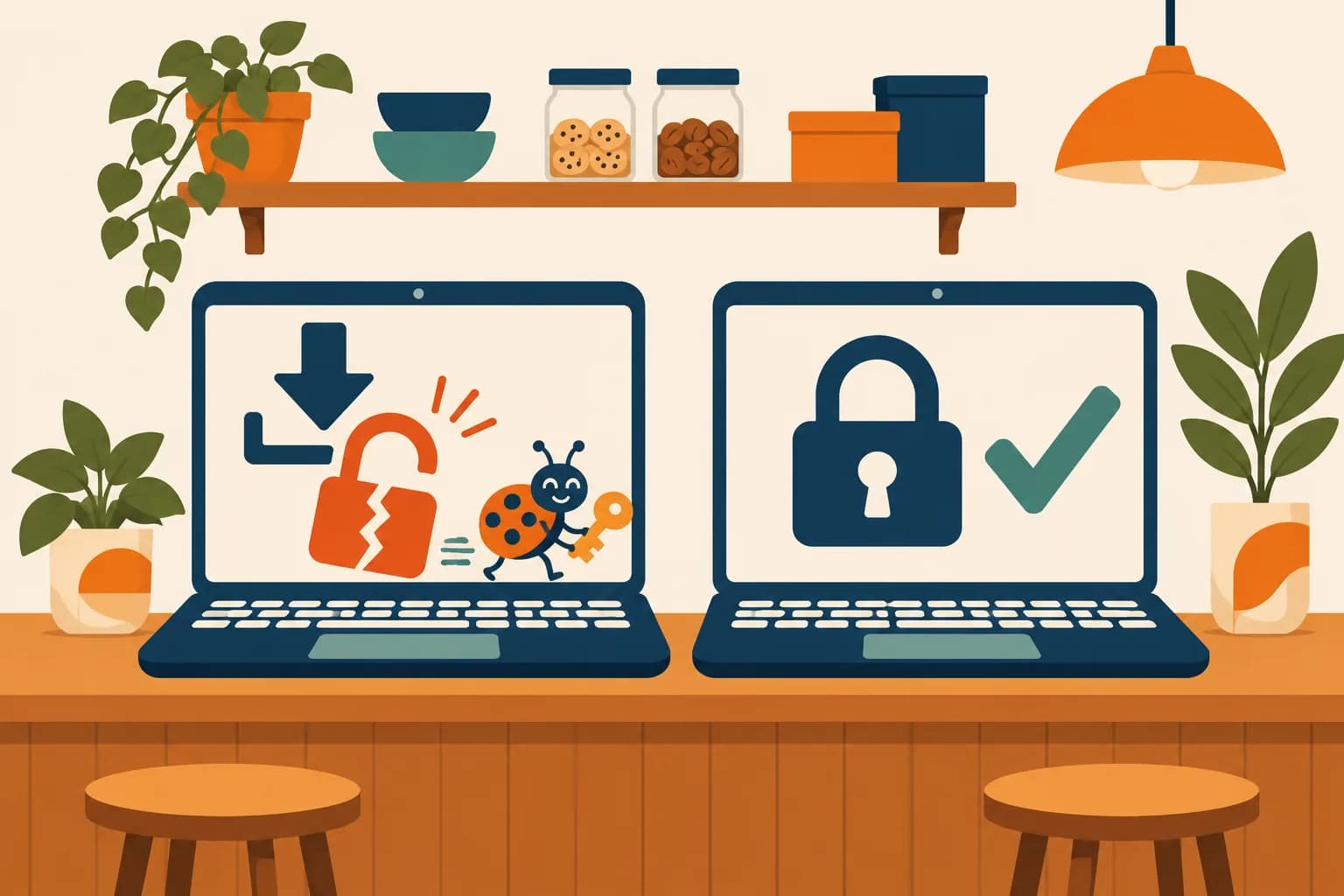
Kaspersky counted more than 33,300 attacks on small and medium businesses using malware disguised as AI services from January to April 2026, about five times as many as in the same period a year earlier. Kaspersky also found fake sites offering "Windows apps" for DeepSeek and Grok whose installers gave criminals remote access to the victim's computer. Google's Mandiant found Facebook and LinkedIn ads for fake "AI video generator" sites that installed data stealers taking logins, cookies and credit card details.
Shared accounts are a problem from the start. OpenAI's and Anthropic's terms both forbid sharing account logins with anyone else. In 2023, Group-IB found more than 101,000 stolen ChatGPT logins being traded, 2,555 of them from Indonesia. Most were stolen by malware hidden in disguised apps or files.
Warning signs
- The price is far below the official price, and you get someone else's email and password instead of an invitation to your own account.
- A "desktop version" is offered for a service that really only exists as a website or an official app in the app stores.
- An AI tool is promoted through ads and then asks you to download a ZIP or EXE file.
- An AI browser extension asks for permission to read every site you visit.
- The site's name is slightly different from the official address: an extra letter, a hyphen or a different ending.
Rules for your shop
- Buy AI subscriptions only from the official website or app, in your shop's own name and email.
- Type the website address yourself, not through ads or links from groups. Kaspersky advises always checking the spelling of the address.
- Don't install installers from ZIP or EXE files people send you. If an AI service has an official app, the link is on that service's official website.
- One person, one account. Don't share AI logins with people outside the shop, and don't use someone else's login.
- Back up the shop's data regularly, so a computer hit by malware can be restored without losing data.
If it already happened
- If you already installed a suspicious app: disconnect the computer from the internet, then remove the app.
- From another, clean device, change the passwords for email, mobile banking, marketplaces and the shop's social media, and turn on two-step verification.
- If the computer was used for internet banking, call your bank on its official number and tell them what happened.
- If you're not sure the computer is clean, ask a trusted technician to reinstall the system, then restore your data from the backup.
Full steps for the first hour: Already been scammed?
Share it with your family and staff groups
Scams work best on people who have never heard of the pattern. One message can stop one.
Send on WhatsAppSources
- Malware attacks on SMBs disguised as AI services surged by five times in 2026 · Kaspersky · 29 June 2026
- Trojans disguised as DeepSeek and Grok clients · Kaspersky · 6 March 2025
- Cybercriminals Weaponize Fake AI Websites · Google Cloud / Mandiant · 27 May 2025
- 101.000 Akun ChatGPT Dibobol Hacker, Ada Ribuan dari Indonesia · detikInet · 24 June 2023
- Terms of Use · OpenAI
- Consumer Terms of Service · Anthropic
Updated 7 November 2026. This article is general education, not legal advice. Official numbers and addresses can change: always check the institution's official website.