
Fake voices and videos: "The boss wants a transfer", "Mum, I'm in trouble"
AI can copy the voice and face of someone you know. A family code word and the habit of calling back are enough to stop it.
4 min readUpdated 7 November 2026
What happened
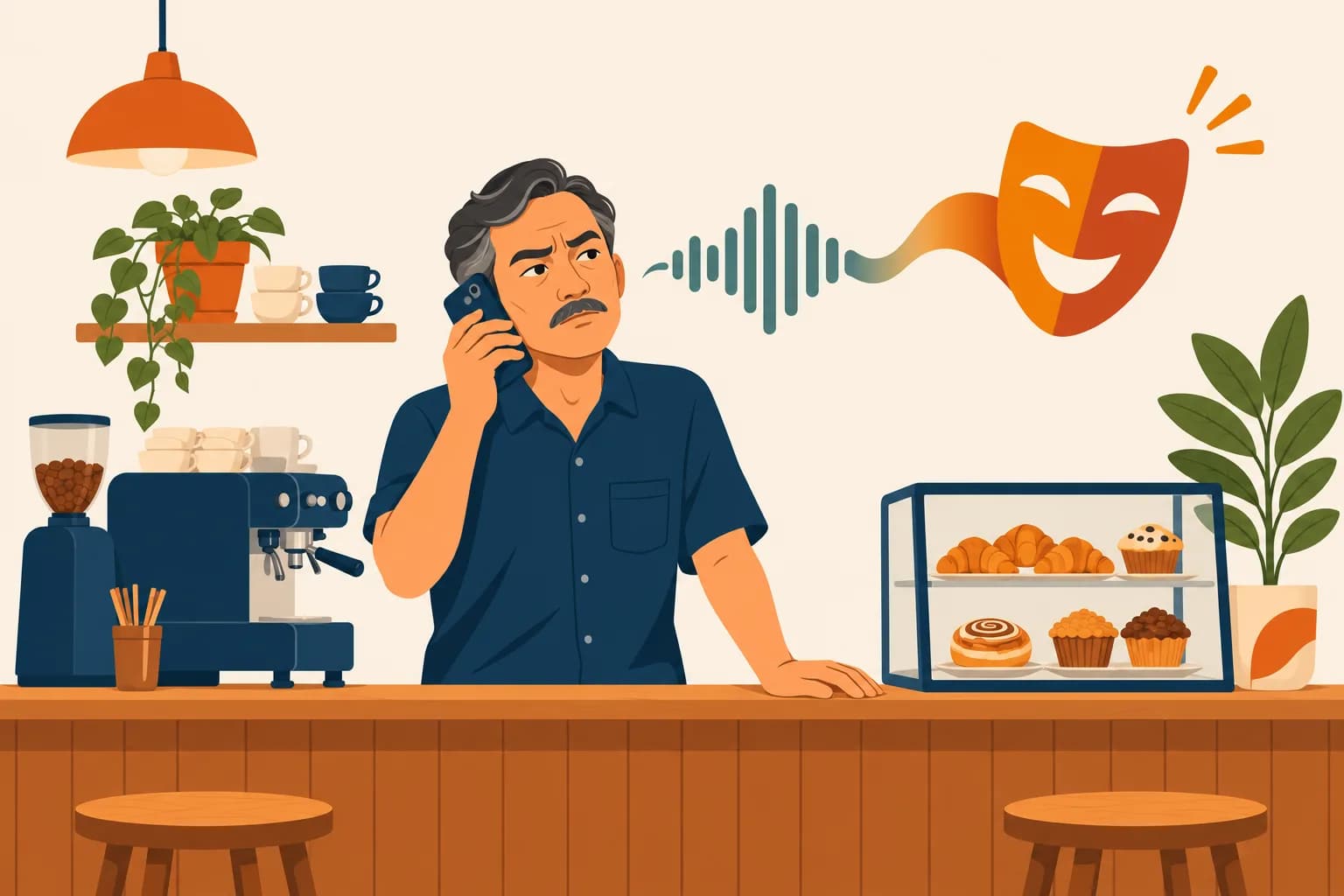
One afternoon Dewi, the cashier at Bu Wati's cake shop, got a call. The voice was exactly Bu Wati's, accent and all. "Dew, the flour supplier wants paying now, they changed accounts. Transfer seven million, I'm on the road and can't talk long."
Dewi nearly did it. But Bu Wati had once made one rule: any transfer request by phone must be checked by calling back her saved number. Dewi hung up and called back. Bu Wati was at home and had never called.
The same pattern is used on families: a call from a crying "child" who says they had an accident or were arrested and needs money right now.
How is this possible?
Satgas PASTI, a task force under Indonesia's financial services authority (OJK), warns that scammers use AI to copy the voices (voice cloning) and faces (deepfakes) of friends, colleagues or family, and then talk as if they were that person. Fake video can copy a face and its expressions quite convincingly.
The material often comes from social media: videos, voice notes or live streams we post ourselves. By the end of June 2026, OJK's Indonesia Anti-Scam Centre (IASC) had received 1,379 reports of AI-related fraud.
It happens to large companies too. In 2024, a finance employee at the Hong Kong office of the engineering firm Arup joined a video call with people who looked like his superiors and colleagues. All of them were fake. He transferred about 25 million US dollars.
Warning signs
- You know the voice or the face, but the request is unusual: a sudden transfer, a new account, or personal data.
- There is time pressure: "right now", "don't tell anyone", "I can't talk long".
- The number is new or not saved, with an excuse like "my phone broke" or "this is a friend's number".
- The caller refuses or changes the subject when asked something only that person would know.
- In a video, the lips, eyes or light on the face look odd. But a smooth video is not proof it is real.
Rules for your shop
- Call back first. Any request for money by phone, voice note or video is checked by calling back a number you have had saved for a long time, not the number that just contacted you.
- Agree on a family and shop code word. One word or phrase that only family and key staff know. The FBI recommends this. If the caller can't say it, hang up.
- Transfers to a new account need two people to approve. For example the owner and one trusted person, and never on the strength of a phone call alone.
- Give scammers less to copy. Consider limiting who can see videos and voice recordings of you and your children on social media.
- Tell your parents and staff about these rules. Scammers deliberately pick the person most likely to panic.
If it already happened
- If money has gone, call your bank right away on the official number on the back of your ATM card and ask them to hold the transfer.
- Report it to the Indonesia Anti-Scam Centre at iasc.ojk.go.id, or through your bank.
- Keep the evidence: the caller's number, recordings, screenshots and the transfer receipt.
- Warn family and other staff, because scammers often try the next person the same way.
Full steps for the first hour: Already been scammed?
Share it with your family and staff groups
Scams work best on people who have never heard of the pattern. One message can stop one.
Send on WhatsAppSources
- Satgas PASTI Imbau Masyarakat Waspadai Penipuan Menggunakan AI (SP 08/STPASTI/XI/2025) · OJK / Satgas PASTI · 15 November 2025
- OJK Ungkap 6 Modus Penipuan Keuangan Berbasis AI, Sudah Ada 1.379 Kasus · Katadata · 4 August 2026
- Wajah & Suara Dicuri dari Medsos, Ujungnya Minta Uang · CNBC Indonesia · 4 August 2025
- OJK Ungkap Modus Penipuan Keuangan Pakai AI, Ini Lengkapnya · CNN Indonesia · 4 August 2025
- Criminals Use Generative Artificial Intelligence to Facilitate Financial Fraud (PSA I-120324-PSA) · FBI Internet Crime Complaint Center · 3 December 2024
- British engineering giant Arup revealed as $25 million deepfake scam victim · CNN (salinan sindikasi) · 16 May 2024
Updated 7 November 2026. This article is general education, not legal advice. Official numbers and addresses can change: always check the institution's official website.